Sunday, 13 March 2011

Ideas

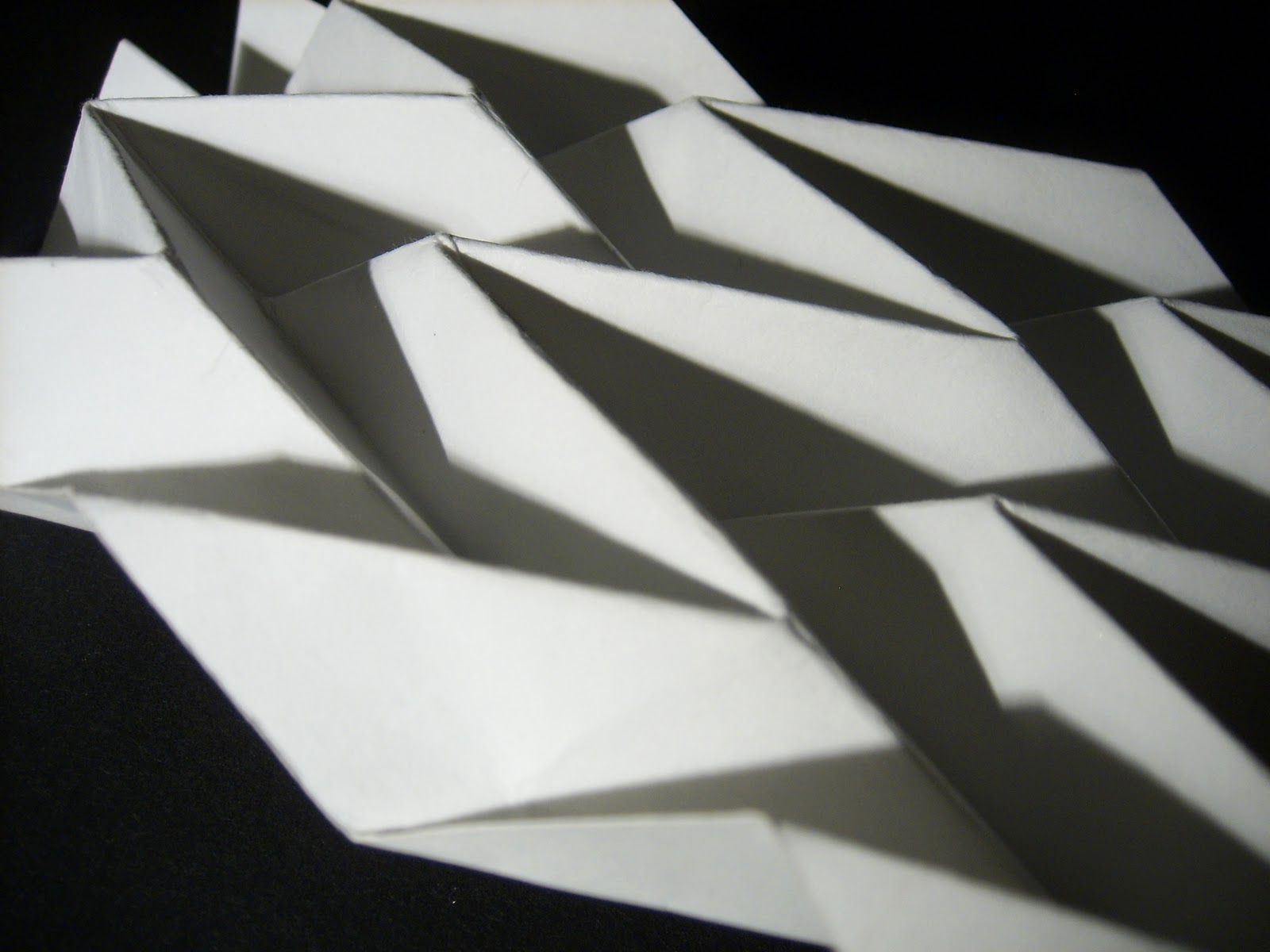
For task two I looked at previous models I had experimented with as to determine an idea to begin with. I found a particular interest in these models where different sized strands of paper have been cut into the sheet, separated and overlapped. I looked at some quick ideas, incorporating these sculptures into my celebratory poster. My ideas here were to just place type onto the paper either digitally or drawn on, however, I feel this does not portray the great uses of paper. 


Looking at the same style of model, I chose to experiment with the type differently. I decided to hang each letter from the strands so the outcome appeared as if the letters were floating inside the sculpture. When testing this idea, I soon discovered a huge draw back; there was not enough space to fit all the text inside. To try and correct this i attempted to create a larger scale model as to allow enough space, however, then the strength of the structure was lost and the strands began to fold inside. 


Friday, 11 March 2011

GF Smith Paper

Task Two for my Skills Workshop involved creating a celebratory poster for GF Smith Paper. Due to this i felt it necessary to research the company to help inspire and influence my ideas.


GF Smith was fonded in the 1880's by Mr George Frederick Smith, beginning as a small family business and developing into one of the most recognised, unique and respected paper companies worldwide. It is based in Hull, East Yorkshire where they develop and manufacture wide ranges of unusual and interesting papers for the Graphics and Printing Industries. The company has been trading as speciality paper merchants for over 100 years and is not only producing different papers to be used in a multitude of    creative ways, but are capable of embossing and laminating.

Tuesday, 8 March 2011

Trial and Error: FINAL


Third attempt:
When looking at my previous developments compared to my research I noticed my ideas felt too structured, where as in fact the concept of repeat in a pine cone is random. Therefore, I adapted and reformed my second attempt by stagering the shapes to represent the random and angular repeated forms I concluded from my research on pine cones.
I chose to present the general shape of a pine cone by producing larger forms which gradually get smaller. I feel the overall decision to repeat one basic form only emphasises the factor. I also chose to hang this structure rather then use an adhesive to stick each form together as I felt how the structure naturally hung was an interpretation to the natural aspect of my chosen subject of research, pine cones. 

I have decided to use this structure as my final model as it provided all the elements and aspects that I found interesting in previous experimentations. I love the concept of layering used in my piece which is also illustrated in each separate form rather then just the piece as a whole. The angular appearance presents the feeling of strength such as a quality of a pine cone, however, as also been softened by the way the paper has been folded.


Trial and Error: THREE

I decided to follow the previous concept of using several repeated small models to create a larger structure and chose to use this simple structure i remembered learning to create when i was younger. i felt the shape nicely represented a cross section of a pine cone, with the jagged spikes and the rough edges. i believe when repeated this structure could successfully represent a pine cone and all its repeated forms.


First attempt:
My first thought was to just stack the small structures on top of each other. When done the outcome looked plain and simple, however, defiantly a good starting point to develop!


Second attempt: 
Following the previous attempt as a point to progress I decided I wanted to incorporate the general cone shape of a pine cone which I concluded in my research and preferred in other experimentations. I chose to include this by gradually making the repeat structure smaller. I prefer this idea than the previous; it feels like it has more points of interests, however, I feel the outcome is too structured and planned, appearing more like a pyramid from Egypt then a pine cone!


Trial and Error: TWO

During another workshop, Richard Sweeney suggested re-producing one structure several times, building them together to create a larger structure. I found this idea particularly interesting and was fond of how it exaggerated and emphasised the theme of repeat (after all thats the main concept of my work). I chose to experiement in depth this idea and decided to use a cone shape, which I concluded as the general shape of a pine cone. I am pleased with the outcomes, however, I feel they are too basic in comparison to the intricate structure of a pine cone.

Trial and Error: ONE


After experimenting with different folding techniques I was drawn to this particular idea. The overall outcome reminded me of the repeated forms I discovered in my overlay work as well as the idea of each spike coming in and out.
 

I decided to use this idea and twist it into the cone shape of a pine cone. I feel after doing this the triangle points have changed from being structured to random and unexpected. I feel this idea has successfully demonstrated the aspects of a pine cone i studied in my research.


I also decided to look at different textures. I considered the texture of a pine cone and how there was even repeat found and chose to fold paper to recreate that "woody" feel. I had already looked at previous techniques to produce a texture, but furthered my studies by experimenting with a simple fan folding technique. I believe this idea is perhaps not as suitable as the previous experimentation, as it appears too unnatural.

Previous texture
experimentation

Friday, 4 March 2011

Workshop: Three


When attending my third and final workshop with Richard Sweeney, i decided to experiment with using grids to create a structure, and then testing different ways to use this concept to create a sculpture.


First attempt:
During my first attempt, i chose to cut alternating slits in the paper with a width of one centimetre. i brought the longest edges together forming a cylinder shape and noticed how the the slim strands of paper rippled due to its weak structure.

Second attempt:
Using the same grid structure as the first attempt, i decided this time to change where i joined the edges. this time i joined them in an irregular fashion which i discovered pushed the paper strands outwards as well as twisting them. although these experiment outcomes, i feel, are not beneficial to my developments referring to pine cones, it was interesting to test out these techniques and see what could be produced.


Third attempt:
This time i chose to make each strand a smaller width of five millimetres, and rather then cutting alternative strands out, i kept all present. i followed the idea of my second attempt and joined the edges together randomly. i loved the outcome and how when photographed i could manipulate the light to highlight the spaces between the paper.


Fourth attempt:
using the same grid structure of my third attempt, i again looked at how where i decided to join the edges created a different shape and effect. i feel this scultpure is not as structured as the last attempt.


Fifth attempt:
Here i experimented with combing both the first grid structure and the second grid structure, also incorporating layers into the final object. i love how it appears to be intertwined as the smaller strands wrap elegantly around the larger strands. i am fascinated how looking at this piece from different points of perspective can give a different feel to the image. Looking at the piece as a whole, present the feeling of 'coming together', whereas the close up shot illustrates the use of layering.

Repeated Forms: SKETCHES

The theme of our brief is REPEAT;
Repeat = to duplicate, recur, multiples, something that occurs again.

To help me define the repeat within a pine cone I used the photographs I collected, looking at different sizes and different angles; and produced ink drawings to visualise the repeat forms I discovered. As well, I decided to use overlays on top of my photos, allowing me to highlight the forms I discovered repeated. I aim to use these concepts to generate ideas, trailing different methods of paper manipulation to almost reproduce these sketches in a three-dimensional paper structure.


From my ink sketches a discovered not only the general repeat of the spikes, but of the overall cone shape. I concluded this concept was in repeated in all pine cones.


When using an overlay to highlight the basic repeated forms, the results showed different forms depending on the angle I was examining. However, commonly there was a circular pattern and the forms were often repeated randomly. This illustrates the natural aspect of the object which I feel necessary to portray in my designs!


Wednesday, 2 March 2011

Workshop: Two

During the second workshop with Richard Sweeney I was taught new simple techniques which create emphasis and texture. We were this time allowed to remove large pieces from the paper and use adhesive to join edges.


First attempt:
The concept behind this technique was pushing each fold different ways to create this 'dipping' appearance. I feel this technique could become useful towards my final sculpture due to the angular appearance presented. Perhaps could be used when twisted.


Second attempt:
Following the same principle as the first attempt, I decided to incorporate a texture to the paper and enlarge the size. I like how here the repeated pattern is not the shape, however, the simple folds given the paper to provide a texture. By doing so it has enabled emphasis to each edge and how they are bent. The photograph, I believe, has given this idea a more exaggerated and elegant feel.


Third attempt:
Looking closer at using folds to create texture in the paper i discovered a fondness to the method. Each crease softens the piece which I believe will be a beneficial concept when interpreting the repeated forms in the texture of a pine cone.


Fourth attempt:
Here I chose to test triangular shapes folded into the paper to see what feeling it produced. This piece reminds me of some of the plant research I looked into, particularly the leaves; however, appears to simple and structured for my desired outcome. Pine cones tend to present repeat randomly. I feel the appearance is to planned and perhaps too elegant to illustrate the repeat I concluded. 


Fifth attempt:
The technique here was to score arcs into the paper and fold along them creating an circular shape. I repeated three arcs of different sizes into the paper and once folded brought them together with tape to create this irregular sculpture. The soft curves and the twisting motion reminds me of the patterns I observed when using ink to see how water moves. I am also intrigued how the light shines though certain parts of this piece when being photographed. Although impressed with this technique, it does not portray the repeat i discovered in my research


Change of Plans

I have chosen to change my research ideas as whilst researching further into the movement of water I grew uninspired and had no ideas which interested me! Although changing, my research area will still be looking into repeat forms in organic areas. I have chosen to look closer at the shapes found in pine cones. Unfortunately it is the wrong season to collect pine cones, however, I took a trip to a local flower shop where I managed to pick up several pine cones of different sizes and shapes. I have decided to look at many angels and aspects, as to determine the significant repeats of the object. 


Now for the science bit; when wet, pine cones are closed up, however, when dry they open. Therefore, i have chosen to look at dry pine cones, allowing me to study a greater range of repeated patterns and areas.


I took photographs of the pine cones I collected, looking at different angels, some of which are close ups to highlight certain areas and some of the whole object.


I also produced a few quick observational drawings done in charcoal. I believed this would not only give me another source of research to extract information from, however, also allow me delve further into the repeated forms and the structure of a pine cone. From producing these sketches i spent time examining pine cones as to reproduce them in my drawings.